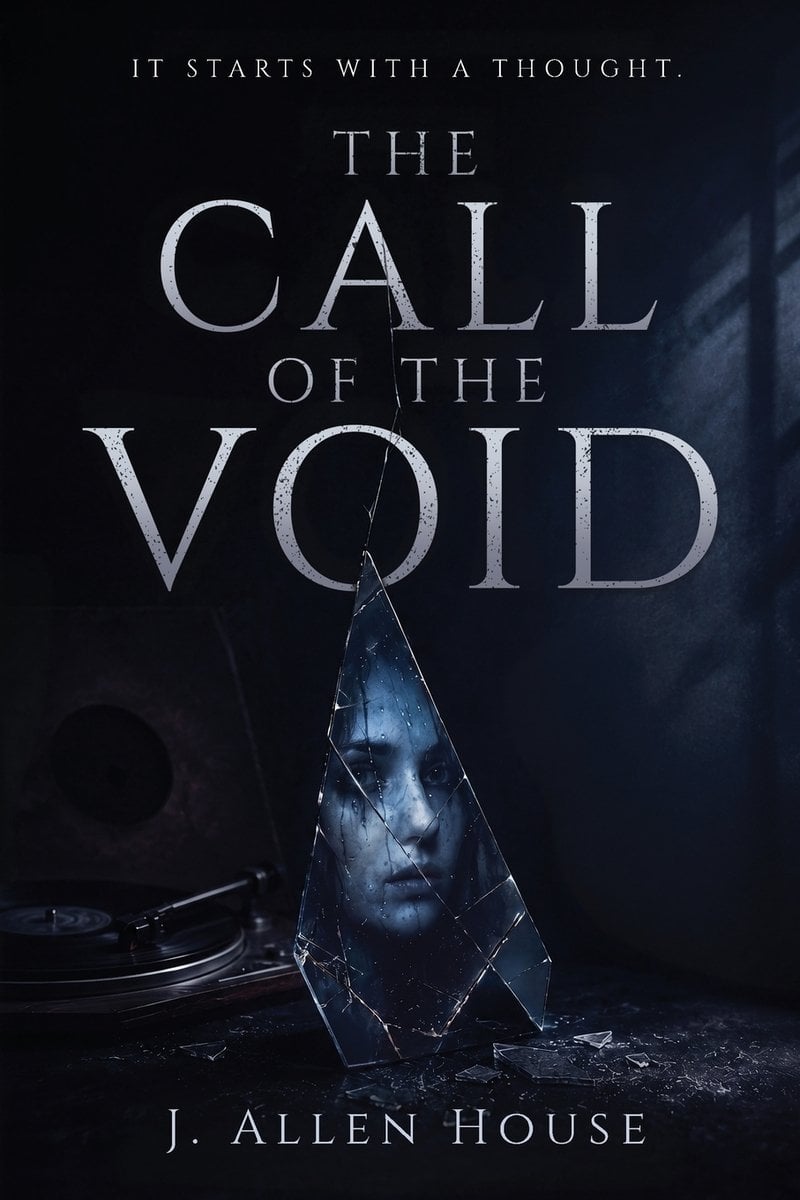
Chapter One
Cold Hollow, October 1956
It wasn’t the deaths that scared them; it was the arrangement. The cows came first. Three healthy Holsteins lay out in the field behind the decrepit Harper place, abandoned for years. Their bodies were open and emptied, but neat. No blood in the grass, no signs of a struggle, no broken fence or predator tracks in the frostbitten dirt. Just the animals themselves, carefully, methodically placed, one at each point of a triangle that pointed toward nothing at all.
The vet said it didn’t make sense. The preacher said it was a sign. The town said nothing, for a time.
Cold Hollow wasn’t the kind of place that leapt to accusations. It let things fester. Let suspicion bubble under a “bless your heart” smile. In a town of 217 people, where the post office doubled as a gossip mill and everyone knew who bought what at the general store, rumors spread fast, but judgments moved slowly. Yet the unease was immediate, silent, and stiff, like frost on a windshield.
People didn’t talk about the cows. They just looked. And Evelyn Harrow was where their eyes landed.
She was never the type to draw attention. If anything, she’d spent most of her life blending into the edges of the room: quiet, polite, easily overlooked. Misunderstood. At twenty, she should have been the kind of girl small-town boys chased after. Her hair was soft and chestnut-brown, her features gentle in the right light. But Cold Hollow didn’t see her that way.
She always felt that there was something more for her outside this town. One day, she wanted to explore that option. But as the days went by, she sensed the townsfolk grew envious of her dream and were willing to do anything to make sure that she didn’t leave.
Nobody was supposed to leave Cold Hollow. It was the unspoken rule. They were all meant to live, grow old together, and be buried in the same little cemetery that housed all the past residents of the town. Another cold, dark headstone, its name faded by the erosion of time.
It started small. A second glance at the general store. A longer pause before someone passed her the salt at the diner. A murmur during service when Pastor Ward bowed his head and prayed for “those lost in shadow,” his gaze catching Evelyn’s eye. She noticed. How could she not? Evelyn noticed everything. But she didn’t say a word. She hadn’t said much since her mother died.
Claire Harrow had been many things: strange, elegant, sharp in the way glass is beautiful just before it breaks. But most of all, she had been Evelyn’s world. Her gravity. When the other children mocked her, when the teachers called home about her “disturbing drawings” and “unusual behavior,” Claire was the one who held Evelyn’s hands and whispered, “Let them fear what they don’t understand.”
They lived to the east, at the edge of town, in a weather-warped house that leaned slightly to the left, struggling not to fall, let alone stand straight. Claire would say it was “full of character.”
The windows were warped. The house creaked constantly at night. And every mirror was draped in lace that shimmered faintly in the dark. Claire’s doing.
Evelyn had once asked about it, years ago, when she was small enough to climb into her mother’s lap and bold enough to question the strange things that made their house different.
“Why do you cover them?” she asked, tugging at the lace on the hallway mirror. “Don’t you want to see?”
Claire had looked up from her book, one brow arched, the barest hint of a smile playing at her lips.
“Mirrors don’t just show you what’s there,” she said softly. “They show you what’s been.”
Evelyn blinked, puzzled. “Like memories?”
“Something like that,” Claire said, brushing a strand of hair behind her ear. “They remember things. Moments. People. And sometimes, if you’re not careful, they show you something dark.”
She rose from her chair and gently pulled the lace back over the glass.
“Don’t stare too long, darling,” she added, almost as an afterthought. “Not unless you want something staring back.”
The way she said it, calm, casual, almost amused, should have made it feel like a joke. But even then, Evelyn had something cold coil up her spine. She never asked again. Still, she always felt safe here. It was her home.
Then came the shattering.
The sheriff said it was a burglary. Thieves, maybe. A smash-and-grab gone wrong. Glass everywhere. The mirrors, fractured like spiderwebs, with the drapes half-fallen over them, but no sign of forced entry. And Claire? She was slumped in the hallway, her throat marked by a slash and a bloom of red, her eyes wide and vacant. There was no note, no struggle, just her brush on the dresser, strands of hair tangled in the bristles, as if she’d paused mid-stroke.
“Hell of a thing,” the sheriff muttered, adjusting his belt with a grunt. He poked at a shard with his boot, the crunch echoing in the quiet.
He didn’t stay long. Said what he had to say, offered a stiff nod, and turned toward the door. His deputy followed, boots thudding across the debris.
But just before they stepped out of earshot, Evelyn heard it, low and ragged: “Tell ’em.”
That was all. Two words. She didn’t know who he meant or what he wanted to say. But her stomach twisted, a cold knot of doubt. The whole world shattered, and with a shiver down her back, she wept.
After that night, she stopped brushing her hair in front of mirrors.
Eating was no longer the same; food was no longer appetizing to her, and it was a chore. Not the warm scent of bread or the slow comfort of a stew. Just cold things from a can. Crackers. Dry cereal eaten by the handful. She lived off the bare minimum, enough to stay alive, but not enough to feel fed.
The kitchen stayed dark. The oven stayed cold. She barely moved, except to sketch unrecognizable symbols and drawings in her journal. And the town, which had always kept her at a cautious distance, now stepped further back.
Then came the cats, dead by the dozens. Some found near the church, methodically placed like the cows.
Then came the preacher’s son, losing his mind. He wandered the cemetery for hours at night, whispering scripture in circles. When someone asked what he was doing, he’d mutter, “feeding the voices.”
Cold Hollow didn’t believe in coincidences. Instead, the town began to wonder. To whisper.
Why was Evelyn always nearby when something happened? Why had she been seen walking past the Harper place the night before the cows were found? Why did she whisper in low tones as if sending a hex?
Why?
And always, they circled back to her. The whispers sharpened into splinters.
“Cursed.” “The occult.” “A witch.”
They never said it outright, not to her face at least.
But Evelyn heard them anyway, in the way conversations stopped when she walked by, in the way doors locked just a little faster as she passed. She saw it in their eyes. That quiet, awful certainty that whatever was wrong in Cold Hollow, started with her.
“She’s got the devil’s eyes,” muttered a woman near the butcher counter.
“She’s too quiet,” said another. “Girls like that don’t grow up. They unfold. Into something ungodly.”
So Evelyn withdrew. She wandered the woods behind the dilapidated shed she once called home, letting the brambles scratch her skin like penance. She built a makeshift lean-to from fallen branches and tarp scraps, a shelter in name only. She was homeless now, not just in place, but in spirit. Her journal became her only companion, filled with thoughts she didn’t trust the wind to carry.
Symbols. Questions. Things she couldn’t say aloud.
At night, she sat beside the moss-soft grave where her mother slept and whispered into the soil. She didn’t expect it to answer. But she whispered anyway. And she watched. She watched the town watch her, with a mix of fear, fascination, and barely veiled disgust. Watched the sheriff lower his voice when talking to strangers outside the pharmacy. Watched the man in the clean gray coat take notes as she passed by.
His name was Dr. Hollis Vern. And he was watching her, too.
The day started with frost. It crept across the puddles on her floor in delicate veins, tracing the water like ghost fingers. Evelyn lay on the edge of her makeshift bed and watched the sunlight try, and fail, to burn through the cold. She didn’t wipe the frost away. It reminded her that things could still be beautiful even as they froze.
She bundled her coat and stepped outside. The makeshift shed groaned as she opened it, wood swollen from the rain the night before. That’s when she noticed them.
Two cars. Both of them, black, polished, humming softly in the cold air, sat near the buckled home. No one in Cold Hollow drove anything newer than 1947. These were newer, sleeker, and marked with government plates. The kind of cars that meant decisions were being made.
One of the men leaned against the hood. Cap pulled low. Arms crossed. Eyes hidden. She could hear the faint sound of music playing on the radio. “…Sunday…” was all she could make out. The distant melody sounded ominous.
Evelyn knew this would be her goodbye to the familiar, so she embraced it. She walked to the shadow she once called home through the thick, muddy path she’d worn down in the trees.
When she reached her gate, it was unlatched.
She never left it unlatched.
Inside, the house was wrong, still, but not peaceful. It was the stillness of breath held hard behind wanting lips, as if her old home was bracing for impact. On the kitchen table, she found her mother’s photograph lying face down. The frame was cracked straight through the middle, like it had split itself on purpose.
She didn’t need confirmation. She already knew.
For the first time in a long time, she wanted something warm to drink. She made tea.
So there, in the dark, she sat in her mother’s old chair, the one near the window with the view of the woods. There, her shack was just visible behind the falling leaves. The kettle hummed. The wind tapped the eaves. She let the stillness sit beside her like a second shadow.
Then came the knock.
She didn’t answer.
The door creaked open anyway.
Sheriff Donnelly stepped inside first. His hat was in his hands. His hair had thinned. His eyes wouldn’t meet hers. Behind him were two orderlies in starched white and a man she’d already seen before: Dr. Hollis Vern, with his perfect collar, snakebite smile, and tobacco stuck at the ends of his mouth.
“Evelyn,” the sheriff said gently, “we just want to talk.”
She said nothing.
Dr. Vern stepped forward. “You’re not in trouble,” he said. “We’re here to help. That’s all.” His voice was high-pitched and shook when he spoke.
Donnelly shifted his weight. “We’ve… spoken with the county. They’re concerned. About your well-being. And,” he paused, “the town’s safety.”
“People are scared,” Vern said softly. “And fear needs a place to go.”
Evelyn’s eyes dropped to the table. To the broken frame.
“I’m not dangerous,” she mustered, barely above a whisper.
“No?” said Vern. “But fear is.”
She didn’t want to go.
She clung to the doorframe, white-knuckled, as if the house might protect her one last time. Her cheeks were wet, her breath sharp and uneven. The sheriff said her name again, softer this time, but she didn’t move.
The two orderlies stepped forward.
She tried to twist away, but they were well-practiced, firm. Not cruel, just indifferent. As if they were moving furniture.
She kicked once, shouted something that came out cracked and useless. Her voice hadn’t been used in so long that it splintered on its way out.
“I don’t want to go,” she whispered, not to them, but to the house. To the air. Maybe to her mother.
They didn’t answer.
Claire’s chair sat by the window, empty. The photograph still lay face down on the table. The broken frame stared at her like a wound.
She cried when they pulled her out the door.
She cried all the way down the steps.
By the time she reached the car, her tears had dried in streaks down her face, and her hands trembled as she held the few things they let her take: a small bag of clothes, her mother’s favorite necklace, and her journal.
She didn’t say goodbye. Didn’t look up when Mrs. Bellman crossed herself from across the street. Didn’t speak when someone behind a curtain whispered, “witch.” Didn’t meet the sheriff’s eyes when he opened the car door and nodded solemnly, like he was performing a funeral rite.
She climbed in because there was nothing else she could do. Because fighting had done nothing. Because the town had already buried her.
Helpless. Hapless.
She folded her hands in her lap.
The town disappeared behind her as they drove. The trees grew taller. The sky was grayer. The road stretched long and empty ahead of them. At one point, she glanced into the mirror above the glove box.
She saw her own face.
And then, just for a moment, she thought she saw a second one beside it.
Watching. Waiting. She closed her eyes.
The record of her life, such as it was, had ended.
Black Vale would write the rest.